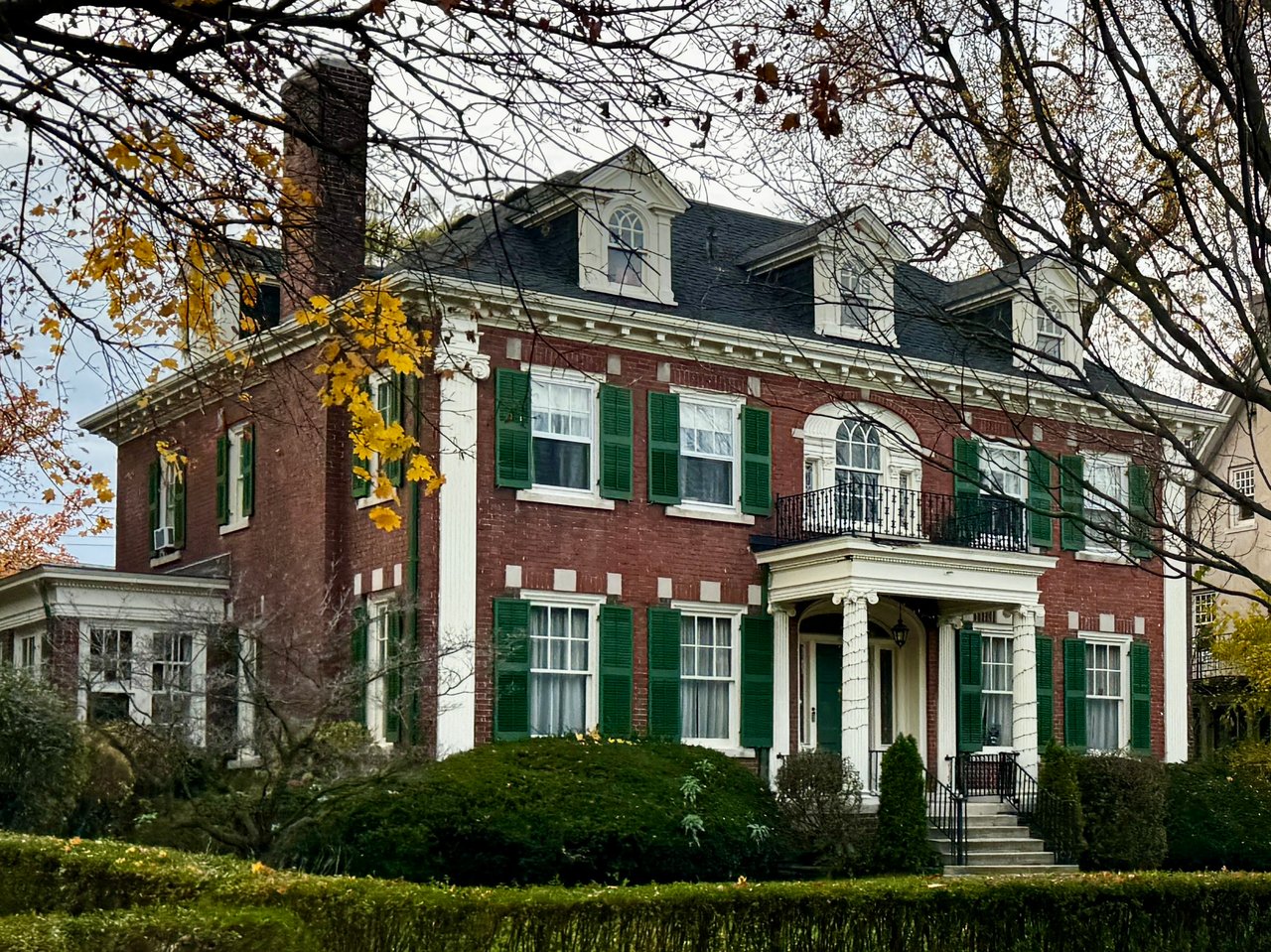
Streets of History: Episode 1
Few places capture the essence of Detroit quite like the Boston-Edison Historic District. Nestled just west of Woodward Avenue, this early 20th-century neighborhood represents the height of Detroit’s architectural, cultural, and industrial glory — a living museum of the era when the Motor City roared to life.
From its stately mansions to its tree-lined streets, Boston-Edison stands as a testament to the city’s golden age, a time when names like Ford, Kresge, Fisher, and Couzens weren’t just brands or politicians — they were neighbors.
🌳 A Neighborhood Born of Innovation
At the turn of the 20th century, Detroit was booming. The automobile industry was transforming the world, and its epicenter was right here. Between 1905 and 1925, hundreds of Detroit’s elite built homes in the newly platted Boston-Edison subdivision — an area offering both proximity to downtown and peaceful distance from the industrial chaos of the growing city.
Designed with grandeur in mind, the neighborhood featured broad boulevards, deep setbacks, and architectural diversity rarely seen elsewhere in the Midwest. The homes here weren’t mere structures — they were statements.
Boston-Edison’s developers envisioned more than a collection of mansions; they imagined a community of innovators, entrepreneurs, and civic leaders. And that’s exactly who came.
🏛️ Architectural Majesty on Every Block
One of Boston-Edison’s greatest strengths lies in its architectural variety. Within its 36-block span, you’ll find an extraordinary range of early 20th-century styles, including:
-
Georgian Revival: Symmetrical facades, classical columns, and elegant brickwork.
-
Tudor Revival: Steeply pitched roofs, half-timbering, and leaded glass windows.
-
Colonial Revival: Formal yet inviting, with balanced proportions and traditional detailing.
-
Prairie Style: Low-pitched roofs, strong horizontal lines, and integration with the landscape — inspired by Frank Lloyd Wright.
-
Mediterranean and Arts & Crafts: Stucco facades, tiled roofs, and handcrafted ornamentation.
The result is a neighborhood that feels more like an architectural anthology — a visual record of American design between 1900 and 1930.
Each home was crafted by Detroit’s leading architects and builders, often using materials imported from around the world. Granite foundations, limestone facades, hand-carved woodwork, and Tiffany stained glass made these homes not just residences but enduring works of art.
👑 The Auto Barons’ Playground
It’s impossible to discuss Boston-Edison without mentioning the auto barons who once called it home.
-
Henry Ford lived at 140 Edison Avenue before moving to his Fair Lane estate in Dearborn.
-
James Couzens, Ford’s partner and later Detroit’s mayor and U.S. Senator, resided nearby.
-
Sebastian S. Kresge, founder of the Kresge retail empire (and later Kmart), also lived within the district.
-
Walter Chrysler, Charles Fisher, and many executives from General Motors, Packard, and Hudson Motor Car Company built homes within a few blocks of one another.
For two decades, this was Detroit’s most exclusive address — a neighborhood where industry, politics, and philanthropy intertwined. The Boston-Edison Association, founded in 1921, remains one of the oldest continuous neighborhood organizations in the country, still preserving the area’s sense of unity and purpose today.
🕰️ Decline, Resilience, and Revival
Like much of Detroit, Boston-Edison’s story isn’t without hardship.
After World War II, as automobile production decentralized and suburban expansion accelerated, many of Detroit’s wealthiest residents moved northward to Bloomfield Hills and Grosse Pointe. The once-prestigious district faced decline — homes fell into disrepair, and some were subdivided into multiple units during the mid-20th century.
Yet through every chapter of Detroit’s story, Boston-Edison endured. Its architectural integrity, strong community association, and historical prestige prevented the kind of widespread demolition that devastated other neighborhoods.
During the 1970s and 1980s, a wave of preservationists, artists, and middle-class families began restoring these grand homes. In 1975, Boston-Edison was officially added to the National Register of Historic Places, cementing its place in American architectural history.
Today, restoration projects continue block by block, with many homes once again returning to their original single-family form.
🧱 A Living Neighborhood
Unlike many historic districts that have become static or overly curated, Boston-Edison is still alive — a vibrant, lived-in neighborhood where history isn’t preserved behind glass, but celebrated in daily life.
Homeowners here embrace both heritage and modernity:
-
Renovating original hardwood floors and fireplaces while adding modern kitchens and energy-efficient systems.
-
Hosting annual Home Tours and Holiday Events that draw visitors from across Michigan.
-
Supporting ongoing revitalization efforts that strengthen the surrounding North End and New Center communities.
It’s a living example of how a historic neighborhood can evolve without losing its soul.
📍 The Boundaries of Beauty
Boston-Edison spans approximately 36 blocks, bounded by:
-
Woodward Avenue (east)
-
Linwood Avenue (west)
-
Boston Boulevard (north)
-
Edison Avenue (south)
It includes more than 900 homes, nearly all of which are protected under historic preservation ordinances. The district is part of the Woodward Corridor, connecting Downtown Detroit to Highland Park and the northern suburbs.
From its manicured medians to its towering maples, the neighborhood’s layout was designed to encourage walkability, community, and elegance — a design philosophy that remains evident more than a century later.
🏠 Why It Matters Today
Boston-Edison represents more than beautiful architecture; it symbolizes Detroit’s ability to endure, adapt, and rise again.
As new generations rediscover the city’s historic neighborhoods, this district serves as a blueprint for sustainable restoration. It reminds us that progress doesn’t have to mean erasure — that the future can coexist with the past.
For homebuyers, the appeal is clear: spacious lots, timeless craftsmanship, and a strong community identity just minutes from Midtown and Downtown Detroit.
And for Detroiters, Boston-Edison remains a beacon — proof that legacy and livability can thrive side by side.
🎥 Featured in Streets of History | Episode 1
Boston-Edison takes center stage in Episode 1 of the “Streets of History” YouTube series, produced by History Loves Company.
Hosted by Realtor and storyteller Chris Hubel (@properties | Christie’s International Real Estate), the episode dives into the district’s origins, architecture, and enduring legacy — complete with cinematic visuals, aerial shots, and insights from local residents.
📺 Watch “Inside Detroit’s Iconic Boston-Edison District” on YouTube
“Every home has a story… let’s discover yours.”
🏠 Explore Homes for Sale in the Boston-Edison Historic District
If you’ve ever dreamed of owning a piece of Detroit history, Boston-Edison offers some of the city’s most remarkable opportunities.
From early-1900s colonials rich with original detail to carefully restored mansions blending old-world charm with modern comfort, each property here tells a story worth living in.
On our Boston-Edison Historic District real estate page, you’ll find:
-
🏡 Active Listings – View all current homes for sale in the district, updated daily through our MLS/IDX feed.
-
📸 Video Tours & Neighborhood Highlights – Exclusive walk-throughs and aerial footage from our Streets of History series.
-
🏛️ Historic Insights – Learn about notable homes, architectural styles, and what makes Boston-Edison one of the most prestigious addresses in Detroit.
-
📞 Personal Guidance – Whether you’re buying, selling, or restoring, our team at History Loves Company specializes in connecting clients to the homes that made Detroit great.
👉 Explore Boston-Edison Homes for Sale →
🗝️ Fun Facts
-
The district was platted by the Newberry family, heirs to a lumber fortune who envisioned Boston-Edison as a premier residential park.
-
Street names like Boston, Chicago, Edison, and Longfellow were chosen to evoke culture and progress.
-
The neighborhood’s association has operated continuously for over a century — one of the longest-standing in the nation.
-
Henry Ford’s original home here (140 Edison Ave) still stands today and has been carefully preserved.
💬 Final Thoughts
Walking through Boston-Edison feels like flipping through the pages of Detroit’s living history. Every column, brick, and cornice carries a story — of ambition, craftsmanship, and rebirth.
It’s not just one of Detroit’s most beautiful neighborhoods.
It’s one of America’s most enduring.
🔔 Subscribe & Explore
For more stories from Detroit’s past and present, subscribe to History Loves Company on YouTube, or sign up for our free newsletter, The Stories We Keep — where every week, we uncover the homes, neighborhoods, and people who shaped our history.