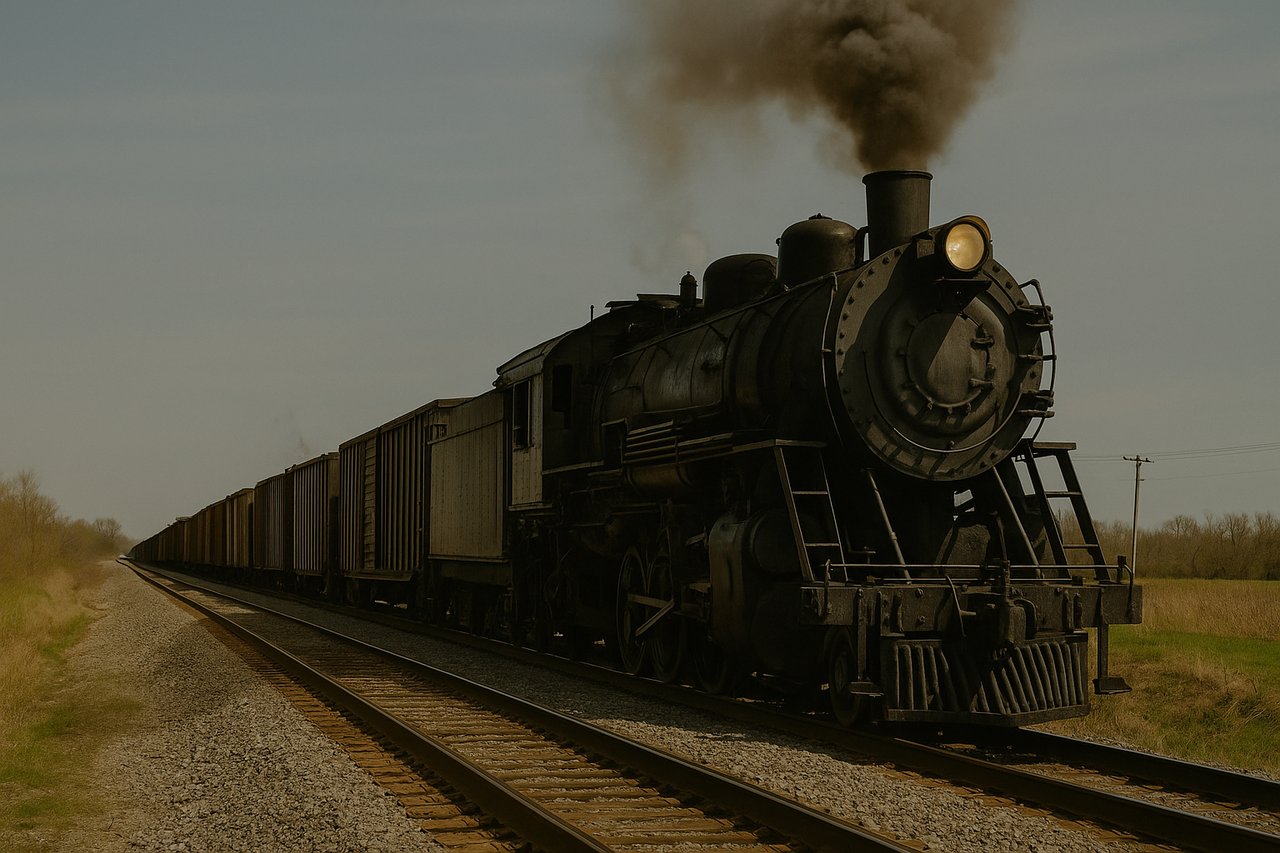
Streets of History — Episode 5 | A History Loves Company Original
Before highways carved across the landscape and long before automobiles defined Michigan’s identity, one force shaped the state more than any other:
the railroad.
Trains didn’t just connect cities — they built them. They fueled Detroit’s rise, carried workers to booming factories, connected lumber towns in the north, moved iron ore from the Upper Peninsula, and tied every corner of Michigan into the national economy.
Today on Streets of History, we explore the Rails of Michigan — the train lines that turned a frontier state into an industrial powerhouse.
The Beginning: Michigan’s Golden Age of Rail
In the 1800s, Michigan was growing fast, but movement was slow. Roads were muddy, travel was dangerous, and shipping materials took weeks.
Railroads changed everything.
The first lines connected Detroit to Pontiac, then stretched outward to Flint, Jackson, Grand Rapids, Bay City, and Chicago. Within decades, Michigan had one of the most extensive rail systems in the Midwest.
Railroads allowed Michigan to rise in:
-
lumber production
-
mining
-
manufacturing
-
agriculture
-
immigration
-
military transport
-
industrial development
Every major industry Michigan became known for started with the rail.
The Lines That Built the State
Michigan Central Railroad
Detroit → Ann Arbor → Jackson → Chicago
The most influential line in the Lower Peninsula and critical for early automotive distribution.
Grand Trunk Western
Pontiac → Flint → Saginaw
A vital freight and passenger corridor that shaped central and eastern Michigan.
Pere Marquette Railway
Grand Rapids & West Michigan
Connected port towns, resorts, and lumber hubs.
Detroit & Mackinac Railway
Alpena → Bay City
“The Million Dollar Road” of northern Michigan.
Soo Line & Upper Peninsula Rails
Carried ore, timber, and freight that fueled America’s steel industry.
Every line carried years of stories — towns built from sawdust, factories rising beside tracks, and thousands of workers who relied on rail to shape their lives.
Michigan’s Historic Train Stations
Train stations were more than transportation hubs — they were architectural landmarks.
Michigan Central Station – Detroit
An abandoned giant for decades, now being reborn.
Durand Union Station
One of the busiest rail crossings in the country and still active today.
Pontiac Depot
Once a major GTW stop — still standing as a reminder of Pontiac’s industrial strength.
Ann Arbor Depot
Converted into one of the city’s most iconic restaurants.
These buildings are the cathedrals of Michigan’s rail era — and many still stand.
The Polar Express: A Michigan Legend
Michigan is home to Pere Marquette 1225, the real locomotive whose voice and steam profile inspired The Polar Express.
Today, it still runs magical winter excursions out of Owosso, making it one of the most beloved pieces of living rail history in the United States.
How Railroads Shaped Michigan’s Map
Look at any Michigan city, and the influence is obvious:
-
Detroit’s New Center district
-
Pontiac’s Woodward Loop
-
Flint’s industrial belt
-
Jackson’s rail yards
-
Saginaw’s depots
-
Grand Rapids’ factories
Rail lines determined where neighborhoods formed, where factories rose, and where people lived and worked.
Michigan’s railroads didn’t just move goods — they moved the future.
Watch Streets of History – Episode 5
Experience the full journey through Michigan’s forgotten rail lines, historic depots, active corridors, abandoned stretches, and the stories behind them.
📺 Watch the episode:
https://youtu.be/7KQ_38nXIaI
Every street has a past — let’s walk through it.